In recent months, I have been reflecting on how much we have gained and how much we seem to be losing in terms of unity, empathy, and shared purpose. I have heard some Black women say they no longer feel called to protest or demonstrate, believing that others have benefited more from the struggles we have led. I understand that pain deeply.
But I also think of my mother, Evelyn Thomas Butts, who never stopped believing in the power of ordinary people to make extraordinary change. Her courage reminds me that even in times of division, we cannot afford to give up on each other.
This essay is both a reflection and a call to rebuild, not through anger or despair, but through honesty, compassion, and shared responsibility.
I have been feeling a heaviness lately, a quiet sense that we are losing the ground so many before us fought to gain. Some Black women tell me they no longer want to join demonstrations because they believe that when the struggle ends, white women often receive more of the benefits. I understand that feeling.
For generations, Black women have been the backbone of justice movements that shaped this country. We have organized, marched, and sacrificed, often without recognition. Yet time and again, the rewards of those struggles have not been shared equally. Many now look at how a majority of white women voted against our interests and wonder what happened to solidarity.
Still, if we stop showing up and abandon the belief that this nation can live up to its promises, we give away the very power that has carried us forward. The answer is not to withdraw. The answer is to rebuild together.
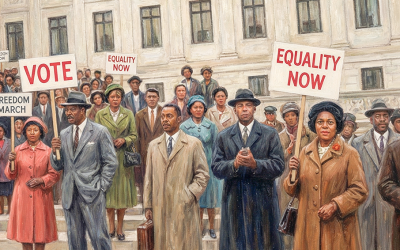
When I think about rebuilding, I think about my mother, Evelyn Thomas Butts. She was an ordinary seamstress from Norfolk, Virginia, who had the courage to do something extraordinary. In 1963, she filed the lawsuit that went all the way to the United States Supreme Court and ended Virginia’s poll tax, a law that had silenced Black voters for decades. My mother did not wait for others to lead. She stood up and changed history.
Her fight was not only about a court ruling. It was about dignity and inclusion, and about ensuring that everyone had a voice in their own future. She believed that progress comes only when all of us take part, even when the road is long and unfair.
That is the spirit we need again today. We can rebuild by talking honestly across our divides, by listening to one another’s pain without judgment, and by remembering that our shared humanity matters more than any political label. We can rebuild by working side by side in our neighborhoods, mentoring young people, caring for elders, and creating examples of cooperation that restore trust and hope.
Progress has never come easily. It did not when my ancestors sought freedom, and it did not when my mother fought to abolish the poll tax. It will not come easily now. But we are still capable of greatness, not the kind handed down from power, but the kind that we build together from the ground up.
As I think about the road ahead, I believe our strength still lies in our willingness to reach for one another, even when it feels difficult. Real progress will come when we choose to listen, to learn, and to stand together again. If this essay speaks to you, I hope you will share your thoughts or experiences in the comments. Every voice adds another thread to the fabric of understanding we are trying to mend.