Charlene's Commentary

Truth, History, Democracy, Legacy.
Chapter 1: Fear Is Cheaper Than Persuasion

Chapter 1: Fear Is Cheaper Than Persuasion

This series reflects on fear not as emotion alone, but as a system of deterrence through which societies teach people when to speak, when to hesitate, and when to remain silent.

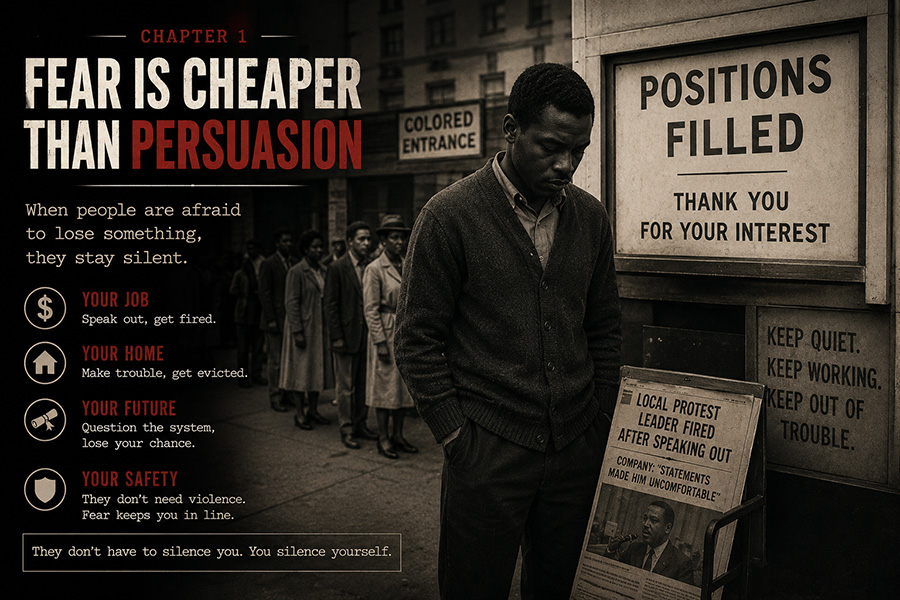
There are two basic ways to govern people. You can persuade them or frighten them.

Persuasion takes time. It requires arguments, patience, listening, and compromise. It assumes people can be reached.

Fear is much faster. It does not need to convince anyone of anything. It only needs to be believed.

I did not learn this as an abstraction. I watched it happen in my own family.

In April of 1968, I was nineteen years old. Dr. Martin Luther King Jr. was assassinated on April 4. The country shifted overnight. Conversations changed. Silences grew longer. People paid attention differently.

Easter fell on April 14 that year. My mother went to work as she usually did. During the Easter season, she sometimes worked as a temporary seamstress in a men’s clothing store, making alterations. In those days, people dressed up for church. The stores were busy, and there was always work to do.

That week, she wore her March on Washington button to work. She talked about Dr. King. She talked about the struggle, not loudly or disruptively, but clearly enough that anyone listening understood where she stood. She worked all day.

And that was the last day they ever called her back. No one said she was fired. No one claimed she had done anything wrong. They simply never asked her to return. It was a white-owned store. No explanation was necessary.

I understood exactly what had happened.

That is how fear-based systems prefer to work. They do not argue with you. They do not debate you. They do not even have to threaten you directly. They quietly make an example, and everyone else notices.

Fear doesn't have to be justified; it just needs to seem convincing. It doesn't need to win people's affection; it only needs to silence opposition.

Jim Crow did not survive because most people believed in it. It survived because most people understood the cost of challenging it.

Fear worked through many channels. Sometimes it was loud: threats, violence, intimidation. Sometimes it was quiet: lost jobs, closed doors, phone calls that never came. Most of the time, it was simply understood.

You did not need to be told what would happen if you stepped out of line. You learned by watching what happened to someone else.

That is the logic of fear-based systems. They do not have to punish everyone. They only have to punish enough. After that, the rest of the work gets done voluntarily.

People monitor themselves. They measure their words and warn each other. They stay in bounds without being told because they already know the consequences of stepping outside them.

Over time, the lines stop feeling imposed. They begin to feel natural, just the way things are.

My mother had lived inside a system like that her whole life. She watched what it did to people. She watched how it trained them to lower their voices, narrow their hopes, and explain their own confinement as realism.

But she also saw something else. She saw how fragile that system really was. Because fear has one great weakness: it depends on believability. The moment enough people stop believing that silence will save them, fear begins to lose its power.

That is why fear-based systems work so hard to stay visible. They need examples, stories, and reminders. Fear does not have to be constant. It only has to be available. We like to tell ourselves we live in a more sophisticated era, and in some ways we do. But the basic logic has not changed. It is still easier to frighten people into compliance than to persuade them to agree.

The tools evolve. The method remains. My mother’s life is not simply a story about the past. It is a story about this logic, about what fear does to people, how it shapes behavior, and what happens when someone finally decides not to accept it anymore.

But before lawsuits, courtrooms, and headlines, there was the daily world we all had to live inside, a world where the system rarely announced itself dramatically.

It taught its lessons quietly, through routine, repetition, and small humiliations that were meant to seem ordinary.

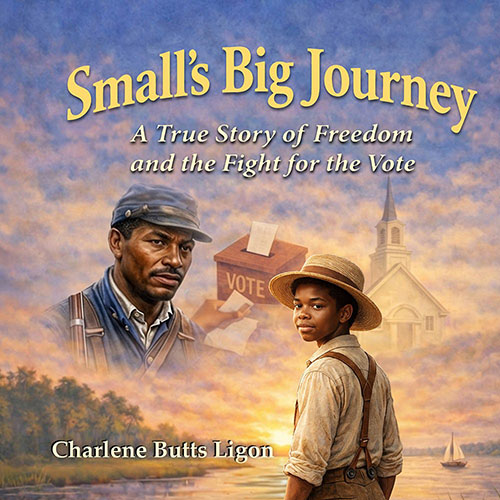
Why I Wrote Small’s Big Journey

Why I Wrote Small’s Big Journey

Some stories stay with a family for generations.

They are told in pieces at the table, at gatherings, in quiet moments when someone decides it is time to remember.

The story of my great-great-grandfather, Smallwood “Small” Ackiss, is one of those stories.

He was born into slavery in Virginia. He lived through a time when freedom was uncertain, and the future was not promised. But he endured. He worked. He believed in something more.

When the Civil War came, he joined the United States Colored Troops and fought for that freedom.

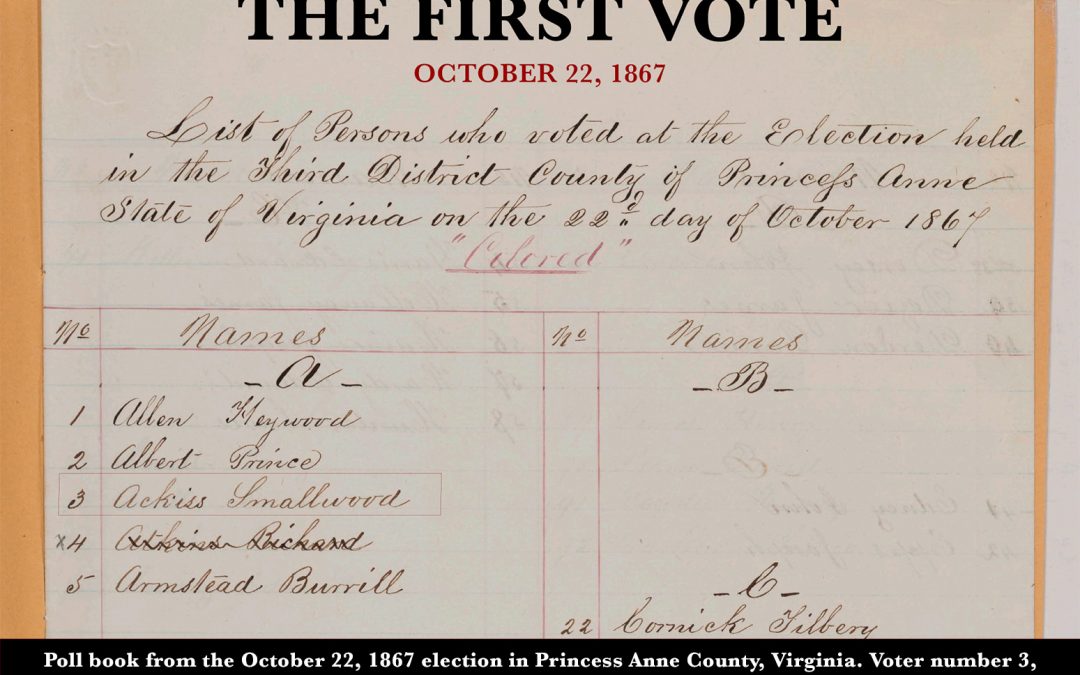
After the war, he returned home and built a life rooted in faith, family, and hard work. And in 1867, he stood in line and voted for the very first time, claiming a right that had once been denied to him.

That moment matters. Because his courage did not end with him.

Generations later, his great-granddaughter, my mother, Evelyn Butts, took that same fight to the United States Supreme Court and helped end the poll tax, a barrier that had kept so many from voting.

This is the legacy I come from.

And it is the story I wanted children to understand.

I wrote Small’s Big Journey because I believe children deserve to know that history is not just something that happened long ago, it lives in families, in choices, and in the courage passed from one generation to the next.

I also wrote it because some parts of our history are not always fully recorded. For those born into slavery, details like exact birthplaces were not always preserved. But their lives, their strength, and their impact are no less real.

This book is my way of honoring that truth.

It is a story about freedom, about perseverance, and about what it means to stand for something, even when the path is difficult.

And now, I’m honored to share it. Small’s Big Journey is now available for preorder:

https://smallwoodcharlottepress.com/

Books will ship beginning May 1, 2026.


Thank you for being part of this journey.

The First Sign I Ever Carried

The First Sign I Ever Carried

Norfolk, Virginia, 1961. I am on the right, age twelve, holding my first protest sign, standing beside Rowena Warren Stancil during a demonstration at Foreman Field.

Every so often, a photograph reminds us not just of where we were, but of who we were becoming. This is the story behind one such photo — and the first time I ever carried a protest sign.

There is a photograph of me at twelve years old standing beside my mother’s friend, Rowena Warren Stancil. We are holding protest signs next to a bus. Hers reads, “$50,000 Reward for the First Black Kiwanian in Norfolk.” Mine says, “In War We Fight Together. Why Not Sit Together in Peace?”

I am young, neatly dressed, and serious. I did not know then that this small moment would become one of the clearest markers of who I was becoming.

The protest took place in 1961 at Foreman Field, on the local campus of the College of William and Mary in Norfolk. Every year before football season, the Kiwanis Club sponsored an exhibition game there between the Washington Redskins and the Baltimore Colts.

That year, Mama and several of her friends decided to protest the game for three reasons. First, the seating in the stands was segregated. Second, the Washington Redskins—alone among NFL teams at the time—refused to hire Black players. And third, the Kiwanis Club itself was an all-white organization, yet this event was being held in a state-supported facility.

The Colts made it known they would not play if the seating remained segregated. The NAACP met with Colts management and, after being assured that the stands would not include a “colored” section, announced that it would not support a demonstration at the event.

But not everyone believed the issue was settled.

Joe Jordan, Ed Dawley, and Len Holt believed that making a fuss was still necessary. They printed flyers announcing a protest and, in a move that was both bold and controversial, put the name and phone number of the NAACP president, Robert D. Robertson, on the flyer and told people to call him. Robertson responded by getting an injunction to stop the flyers from being distributed.

Mama did not believe that an injunction or polite assurances meant the deeper problems had been solved. She brought my sisters and me to the protest anyway.

That day, at twelve years old, I carried a sign for the first time.

I did not fully understand all the politics or the negotiations happening behind the scenes. But I understood something simpler and more important: things were not fair, and grown people I respected were willing to stand in public and say so.

Miss Rowena stood beside me holding her sign about the Kiwanis Club. I held mine about war and peace. The words had been chosen carefully. They were not angry words. They were moral words. They asked a question that did not need much explaining.

Before the game, two Black players from the Colts—Lenny Moore and Johnny Sample—came out to talk to us while we were protesting. That mattered. They did not have to do that. They acknowledged us. Then they went back inside and helped the Colts trample the Redskins, 41–7.

It would take many years for me to fully understand how much courage it took for my mother and her friends to do what they did, and how much pressure surrounded even small acts of protest in those days.

No one paid us to be there. No one paid my mother. No one paid Miss Rowena. No one paid the people who stood and handed out flyers or held signs or took the risk of being seen. THEN AND NOW, PEOPLE DEMONSTRATE BECAUSE THEY CARE, NOT BECAUSE SOMEONE IS HANDING THEM MONEY.

We were there because we believed that citizenship meant participation, and that silence was a kind of consent.

I am 77 years old now. That was my first protest, but it was not my last. It was the beginning of a lifetime of believing that ordinary people have both the right and the responsibility to stand up in public for what is right—even when it is uncomfortable, even when it is inconvenient, even when powerful institutions say the problem has already been solved.

When people today talk about protest as if it is something un-American, I think about that photograph. I think about a twelve-year-old girl holding a sign that asked a simple, honest question.

And I think about how this country itself was born not from quiet agreement, but from people who were willing to make a fuss.

If you have a memory of the first time you stood up for something you believed in, I’d love to hear it in the comments.

I Lived Through the Shift

I Lived Through the Shift

I have been thinking deeply about the conversations happening inside the Democratic Party and how much of it connects to changes I have witnessed during my lifetime. This is a personal reflection from someone who lived through the Civil Rights era and watched the political realignment that followed.

For many Americans, the political realignment that followed the Civil Rights era is something they learned about in school or read about years later. For me, it unfolded in real time.

I was born into Jim Crow America. I grew up in a country where segregation was legal and opportunities were unequal by design. Black families understood clearly that rights could be restricted, delayed, or denied altogether. In my family, civil rights were never abstract political debates. They shaped everyday life.

I remember the protests. I remember the tension people carried. I remember hearing adults talk about politics not as entertainment, but as something tied directly to whether you could vote, find decent work, or simply be treated fairly.

When the Civil Rights Act of 1964 and the Voting Rights Act of 1965 became law, they changed the country in ways that still shape us today. Those laws were necessary and long overdue, but they also accelerated a political transformation that many Americans are still trying to understand.

When I was young, many white Southern conservatives were still Democrats, even while opposing civil rights reforms. The Democratic Party was a complicated coalition that included people with completely different views on race and equality. But after national Democrats embraced civil rights legislation, many white Southern voters slowly began leaving the party. Over time, many found a political home in the Republican Party, especially as cultural resentment, religion, and fears about social change became stronger forces in American politics.

At the same time, Black Americans increasingly aligned themselves with Democrats because the party, despite its flaws and internal disagreements, had become more associated with protecting voting rights and expanding civil rights protections.

But the shift was never only about race.

As the years passed, the Democratic Party also became more closely associated with women’s rights, reproductive freedom, workplace equality, LGBTQ rights, and broader cultural changes happening across the country. Republicans, meanwhile, increasingly presented themselves as defenders of traditional culture, religion, and small-town identity.

I do not believe Democrats lost support in parts of rural America or the South because equal rights for women were wrong. Women deserved equal opportunity, equal protection under the law, and the ability to make decisions about their own lives. But I do believe many culturally conservative voters began feeling that the Democratic Party no longer reflected their communities, values, or way of life.

Over time, politics stopped being only about economics or government programs. Identity, religion, culture, and belonging became just as powerful in shaping how people voted and where they felt politically at home.

Today, I hear many Democrats discussing how to reconnect with working-class voters, rural communities, and Middle America. I understand why those conversations are happening. A political party cannot remain competitive if it loses the ability to connect with large parts of the country.

But I also carry another concern.

I worry about what lessons some leaders may take from recent election losses.

Will the party begin to view civil rights, diversity, inclusion, or women’s rights as political liabilities instead of moral commitments? Will some conclude that the very groups who became central to the modern Democratic coalition are now somehow expendable? Will efforts to regain culturally conservative voters come at the expense of people who spent generations fighting simply to be treated as full participants in American democracy?

Those questions matter deeply to me because I have lived long enough to know that progress can move backward.

I remember poll taxes. I remember segregated schools. I remember a time when Black Americans were told to wait patiently for rights that others already enjoyed. I remember when women had fewer protections, fewer opportunities, and fewer choices about their own lives.

None of those changes happened automatically. People organized, marched, spoke out, and pushed this country to live up to its promises. Some lost jobs. Some lost relationships. Some lost their safety. Some lost their lives.

That history is why I become uneasy when conversations about civil rights or women’s rights are reduced to electoral strategy or “messaging problems.”

At the same time, I do not believe Democrats can afford to dismiss the frustrations of rural or working-class Americans either. Most people want to feel respected. They want to feel seen. They want to believe there is still a place for them and their communities in the country’s future.

The challenge facing Democrats now is larger than simply winning the next election. The challenge is whether the party can build a coalition broad enough to compete politically without abandoning the principles and people that helped define it in the modern civil rights era.

That balance will not be easy.

But for those of us who lived through the beginning of this transformation, these debates do not feel theoretical. We have already seen how quickly this country can divide itself over who belongs, whose rights matter, and whose voices deserve to be heard.

And many of us worry that America may be entering another one of those periods again.

Why I Still Don’t Understand the Virginia Redistricting Election Timeline

Why I Still Don’t Understand the Virginia Redistricting Election Timeline

What continues to bother me about the Virginia redistricting referendum situation is not just the ruling itself, but the timeline.

By January 2026, the courts had already recognized serious legal questions about whether the amendment had even been placed on the ballot within the required constitutional timeframe. Lawsuits had already been filed. Judges were already ruling on it. This was not something discovered at the last minute, right before Election Day.

Thanks for reading! Subscribe for free to receive new posts and support my work.

Yet the election was still allowed to move forward.

On January 27, a judge ruled the amendment unlawful and blocked it from appearing on the April ballot. Then the case was appealed. On February 13, the Virginia Supreme Court allowed the referendum to proceed. On February 19, another judge again ruled the amendment unlawful on different grounds. Then on March 2, the court basically said the election could move forward and the legal issues could be sorted out afterward.

Early voting started on March 6. That is the part I still struggle with. People keep talking about “avoiding confusion,” but honestly, what would have been more confusing than allowing Virginians to vote in an election that was still under serious legal dispute?

At that point, early voting had not even started yet. There was still time to stop, fully review the issue, and either approve the process or move the election date.

Instead, everybody moved forward under uncertainty.

More than $15 million was spent. Campaigns organized around the election. Election officials prepared for it. Voters participated in good faith believing the process had been cleared to proceed. Once the courts allowed the election to continue, most ordinary people naturally assumed the legal problems either had been resolved or were not serious enough to stop the election.

That matters.

The courts knew they still had the power to overturn things later if they chose to. They also knew there was always the possibility voters themselves might reject the amendment anyway, making the whole controversy irrelevant.

So I keep coming back to the same question:
If the courts knew as early as January that the timing might be unconstitutional, why not fully deal with it before voting started?

I understand there were probably concerns about the upcoming primaries, redistricting deadlines, and keeping the election calendar moving. But to me, that makes early clarity even more important, not less.

The larger the consequences, the more important it becomes to settle the legality before people vote.

What troubles me most is the growing feeling that institutions are becoming more focused on keeping the machinery running than making sure the public has confidence in the process itself.

At some point, protecting trust in democracy requires more than telling people to trust the system. It requires resolving major legal questions before voters spend their time, money, energy, and votes participating in an election that may still be legally unsettled.